
















Creating Efficient and Secure APIs: A Complete Guide for Modern Developers

Introduction
Consider the last time you ordered a taxi using Uber, made a payment using Google Pay, or even logged into a website using your Google credentials. Do you remember wondering how these various apps could communicate with each other so efficiently?
The secret behind this lies in APIs.
APIs (application programming interfaces) are the hidden gems of software development. Modern API development enables applications, platforms, and services to communicate seamlessly, making it a critical part of today's software ecosystem. Whenever an app gets its weather updates, an online store makes a payment, or an AI bot responds to a question asked by you, APIs do their magic.
According to Postman's 2025 State of the API Report that more than 65% of enterprises earn revenue through their APIs. It means that APIs are no longer mere tools for integration; they have become a valuable part of business. Organizations increasingly invest in API development & API programming to create scalable digital products, improve integrations, and generate new revenue streams.
This guide covers everything there is to know about APIs including their working, types, security guidelines, best practices, and more.
What is an API?
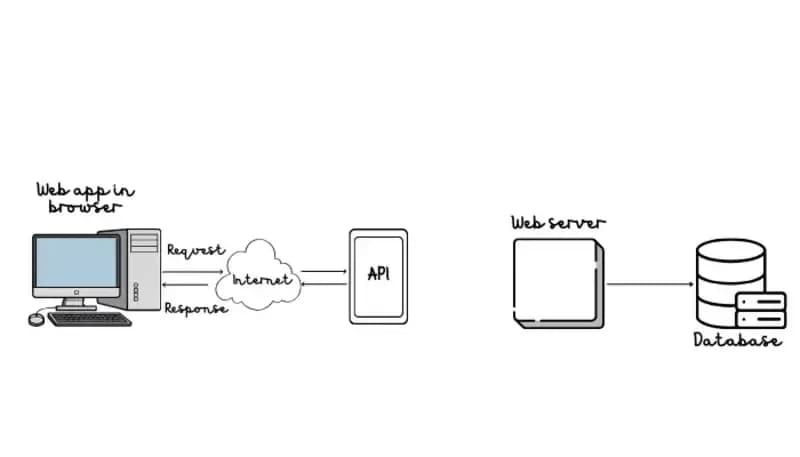
An Application Programming Interface or API is a set of protocols and standards that help software applications work together.
Imagine an API to be a waiter at a restaurant.
- The customer makes a request.
- The waiter passes that request to the kitchen.
- The kitchen prepares the food.
- The waiter then comes back to the customer with the response.
As a customer, you do not have to understand the working of the kitchen. In the same way, while working with an API, there is no need to understand the inner workings of the system.
Example
While using a weather app, for example,
- You launch the weather app.
- The app then requests a weather API.
- The weather API communicates with the weather server.
- The server provides the necessary data.
- This entire process takes a few seconds.
Why Are APIs Important?
Modern software solutions hardly ever run in a standalone mode. Effective API Programming allows developers to connect systems efficiently and accelerate digital transformation initiatives. The current software landscape makes use of APIs extensively since APIs:
- Make communication between systems possible
- Fast-track the development process
- Increase scalability
- Simplify third-party integration
- Enable cloud-native infrastructure
- Help with mobile and web application development
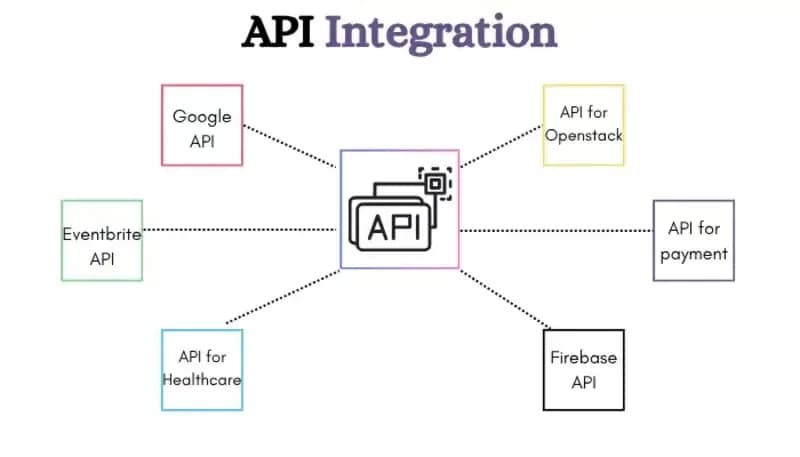
For businesses building or improving their digital platforms, Custom Software Solutions can use APIs to connect applications, databases, payment systems, and third-party services in one connected ecosystem.
Examples:
- Using Stripe's APIs for online transactions
- Using Google Maps APIs for geolocation purposes
- Using OpenAI's APIs to incorporate artificial intelligence functionality into apps
- Without APIs, programmers had to write code for each functionality separately.
Types of APIs
Not all APIs serve the same function. Let's take a closer look at some of the most popular API types.
1. Open APIs (Public APIs)
Open APIs are accessible to developers and organizations outside your firm.
Example:
- Google Maps API lets developers implement maps into their apps.
Advantages:
- Simple to integrate
- Speeds up innovations
- Grows developer community
2. Internal APIs
These APIs are used exclusively by members of your organization.
Example:
- An online store may have internal APIs connecting its inventory system with its order processing system.
Advantages:
- Better integration
- Increased efficiency
- More secure
This type of integration is especially useful for Custom Ecommerce Services, where inventory, orders, customer data, and payment systems need to work together smoothly.
3. Partner APIs
Partner APIs are given to business partners only.
Example:
- Travel websites usually provide partner APIs to airlines and hotels.
Advantages:
- Restricted access
- Business partnerships
4. REST APIs
At the moment, REST (Representational State Transfer) is the most widely-used Application programming interface architectural style and remains a preferred approach in modern API development projects because of its simplicity and scalability.
REST APIs make use of standard HTTP methods such as:
- GET
- POST
- PUT
- DELETE
- Example
- GET /users/123
In this case, we fetch information about user 123.
Why Developers Adore REST
- Simplicity
- Lightweightness
- Scalability
- Compatibility with most programming languages
5. GraphQL APIs
The client gets to specify precisely what they need through GraphQL.
Example
Whereas you'd normally get back an entire user profile, now you could specify:
- Name
- Profile Picture
and nothing more.
Advantages:
- Less data transfer
- Improved speed
- Flexibility in querying
GraphQL is used by major companies such as Facebook.
6. SOAP APIs
SOAP is a protocol based API design that offers high levels of security and reliability.
- Industries
- Financial services
- Health care services
- Enterprises
- Advantages
- In-built security mechanisms
- Standardization of operations
- Transactional consistency
7. RPC APIs
Through RPC APIs, programs get to run procedures located on other servers.
Example
- The banking application on your phone could make use of the function:
- checkBalance()
- on a remote banking server.
- Advantages
- Quick messaging
- Function-oriented calls
8. Composite APIs
Composite APIs involve bundling several API calls together.
- Example
- The online retail site could obtain:
- Product information
- Inventory details
- Customer details
by making just one API call rather than three.
Advantages
- Enhanced efficiency
- Decreased network load
How do APIs Work
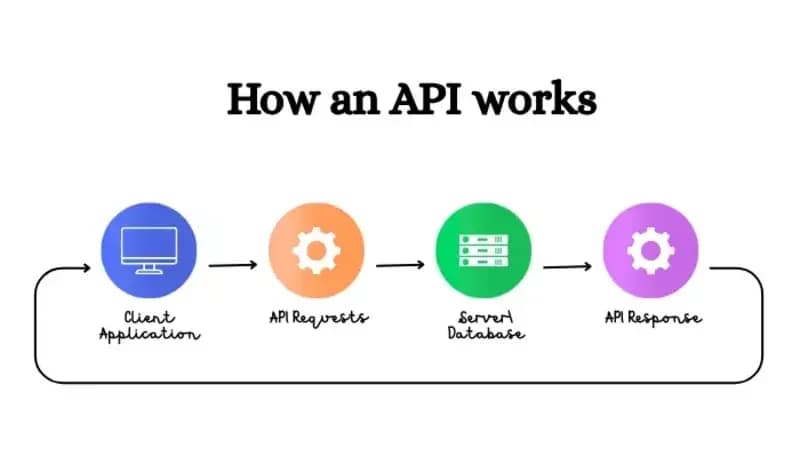
In essence, the process of API communication is pretty straightforward:
Step 1: Client Makes Request
An action performed by the user generates a request.
Step 2: API Gets Request
The request gets processed by the API.
Step 3: Data Processing on the Server Side
The necessary actions are taken by the server.
Step 4: Sending Result
The result is sent back to the client by the API.
Illustration of Process:
Client → Mobile Application → API → Database → API → Mobile Application
Essential Features of an Effective API
An API by itself is not sufficient. Successful API development & API programming require a strategic focus on security, performance, scalability, and developer experience. The same principles are important when building Custom Software Solutions that need to remain reliable as a business grows.
The key to success lies in developing a highly secured, scalable, and developer-friendly API.
1. Proper Authentication and Security Measures
Security must be considered early on.
According to recent findings, APIs are now among the top targets for attacks. It is estimated that there have been around 150 billion API attacks from 2023 to 2024, according to Akamai. This highlights the growing need for robust authentication, authorization, encryption, and continuous API monitoring.
Good Practices
- OAuth 2.0
- JWT Tokens
- API Keys
- Rate Limiting
- Encryption (HTTPS/TLS)
Example
For example:
Not:
api.example.com/users
But:
Authorization: Bearer <JWT_TOKEN>
2. Highly Performed and Scalable Architecture
Poor performance is detrimental to the user experience.
- Techniques for Optimization
- Caching
- Pagination
- Load Balancing
- Database Indexing
- CDN Support
For example:
- Do not return 10,000 items:
- GET /products?page=1&limit=50
3. Documentation for Developers
Even the most powerful API becomes useless if developers can't understand it.
Great API documentation should include:
- Endpoints
- Request examples
- Response examples
- Error codes
- Authentication instructions
Popular documentation tools include Swagger and OpenAPI.
4. Versioning and Backward Compatibility
APIs evolve over time.
Versioning prevents existing integrations from breaking.
Example
/api/v1/users
/api/v2/users
This allows developers to migrate at their own pace.
5. Monitoring and Logging
You can't improve what you don't measure.
Monitor:
- Response time
- Error rates
- API usage
- Security events
Tools like Prometheus, Grafana, and Datadog help track API health.
If you're interested in understanding how ongoing maintenance helps businesses avoid downtime and security risks, check out our detailed guide on Importance of Website Maintenance. For businesses that rely heavily on their online presence, Managed Services can also help with ongoing monitoring, maintenance, and technical support.
6. Continuous Improvement
APIs should evolve based on:
- User feedback
- Performance metrics
- Security requirements
- Business needs
The best APIs are never truly finished.
They're continuously improving.
Important Tools for API Development and API Programming
Here are some popular tools used by modern API teams to streamline API development workflows, testing, monitoring, and documentation processes:
Postman: Perfect for testing and documenting APIs.
Swagger/OpenAPI: Industry-standard API documentation.
Insomnia: Lightweight API testing platform.
Apigee: API management and analytics.
Kong Gateway: High-performance API gateway.
Grafana: Monitoring and visualization.
Prometheus: Metrics collection and alerting.
How to Create an Effective API
Let's put everything together. Whether you're new to API Programming or managing enterprise-level integrations, following a structured development process is essential for success.
Step 1: Define Clear Requirements
Understand:
- Who will use the API?
- What problems will it solve?
Step 2: Choose the Right Architecture
- REST for simplicity
- GraphQL for flexibility
- SOAP for enterprise-grade security
Step 3: Design Consistent Endpoints
Good:
- /users
- /orders
- /products
Bad:
- /GetUsersData
- /GetProductsInfo
Step 4: Secure Everything
Implement:
- Authentication
- Authorization
- Encryption
- Rate Limiting
Step 5: Document Thoroughly
Your documentation is often the first experience developers have with your Application programming interface.
Make it count.
Step 6: Monitor and Improve
Gather feedback and continuously optimize performance.
Final Thoughts
APIs are no longer just technical components hidden behind applications. Strategic API development helps businesses create better digital experiences, while effective API Programming ensures reliability, security, and long-term scalability. They are business enablers, revenue generators, and the foundation of modern digital experiences. Whether you're building a startup product, an enterprise platform, or the next AI-powered application, investing in efficient and secure APIs will pay dividends in performance, scalability, and user trust.
Remember this simple rule:
An API isn't successful because it works. An API is successful because developers love using it. Build for security. Build for scalability. But most importantly, build for the people who will use it. If you are facing any issues related with your website or API, you can call us and get a free consultation. Contact us today!