














How to Use AI in Digital Marketing: Tools and Strategies
Introduction
Artificial intelligence is changing how businesses plan campaigns, create content, understand customers, and measure marketing performance. From content research to campaign automation, AI helps marketing teams handle repetitive tasks and make better use of their data.
However, using AI does not automatically lead to better results. The real value comes from knowing where to use it, checking its output, and connecting it to clear business goals.
In my content workflow, AI is most useful as a starting point. It can help organize research, identify content gaps, and shape an outline. The human work is deciding what matters, verifying claims, adding relevant examples, and making the final writing useful and natural.
What Is AI in Digital Marketing?
AI in digital marketing refers to using technologies such as machine learning, natural language processing, and generative AI to support marketing activities. These technologies can analyze data, identify patterns, generate content ideas, personalize customer experiences, and automate routine work.
For example, a marketing team can use AI to group customer questions, identify search topics, draft email variations, or summarize campaign performance. Marketers still need to review the output and decide which actions support their audience and business goals.
Why Is AI Becoming Important in 2026?
AI adoption is growing, but adoption and readiness are not the same thing. Gartner's 2026 CMO Spend Survey found that chief marketing officers allocate an average of 15.3% of their marketing budgets to AI, while 30% reported mature or fully developed AI readiness.
These figures come from a survey of 401 marketing leaders, most of whom represented organizations generating more than $1 billion in annual revenue. They should not be treated as representative of every business. Still, the findings highlight an important point: investing in AI tools is only one part of adoption. Businesses also need reliable data, clear workflows, human oversight, and ways to measure results.
Source: Gartner's 2026 CMO Spend Survey
Key AI in Digital Marketing Trends for 2026
1. AI-Assisted Content Creation
AI can help marketers research topics, develop outlines, draft content, and repurpose existing material. It can speed up production, but generic content still needs editing, fact-checking, and original insight to stand out.
2. Personalization and Marketing Automation
Businesses can use AI to group audiences, identify customer interests, and support personalized email campaigns. Automation can also trigger messages based on customer actions, provided the underlying data and rules are accurate.
3. SEO, AEO, and GEO
Search visibility now includes more than traditional search results. SEO helps websites become discoverable in search engines. Answer Engine Optimization (AEO) focuses on providing clear answers to user questions, while Generative Engine Optimization (GEO) focuses on making useful information easier for generative AI systems to discover, understand, and potentially reference.
These approaches overlap; they do not replace good SEO. Businesses can strengthen their foundations through Justo's SEO services, which focus on technical performance, content optimization, and search visibility.
Google also explains that its AI search features rely on established SEO fundamentals, including helpful content and accessible pages. There is no guaranteed method for earning visibility in AI-generated answers.
Source: Google's guidance on AI features in Search
4. AI-Powered Analytics
AI can help teams summarize performance data, identify unusual changes, and explore possible reasons behind campaign results. Marketers must still validate findings against reliable data before changing their strategy.
5. Content Repurposing
A research-backed article can become an email, a social post, or a short video script. AI can help adapt the format, while editors ensure that each version fits its platform and provides value on its own.
Popular AI Tools for Digital Marketing
Choose tools based on the task, your existing workflow, and the level of human review required. Features and pricing can change, so check official product pages before choosing a plan.
Content and Research Tools
- ChatGPT: Supports brainstorming, research assistance, outlines, and content drafts. Verify facts and source claims independently.
- Google Gemini: Helps with research and supports Google Workspace tasks. Check the quality of sources and generated answers.
SEO Tools
- Semrush: Supports keyword research, competitor analysis, and website audits. Validate recommendations against your site's data.
- Ahrefs: Helps with backlink research, keyword analysis, and competitor research. Treat traffic and ranking estimates as estimates.
Creative Tools
- Canva: Supports marketing visuals, layouts, and design assistance. Review brand consistency and image accuracy.
- Adobe Firefly: Helps create and edit visuals. Check applicable licensing terms and commercial-use requirements.
- Synthesia: Supports AI-generated presenter-style videos. Review scripts, pronunciation, and presentation quality.
Automation and Marketing Tools
- HubSpot: Combines CRM, campaign management, and marketing automation. Ensure workflows match your customer data and goals.
- Brevo: Supports email marketing and customer communication automation. Check deliverability, consent, and audience segmentation.
A Practical Workflow for Using AI in Digital Marketing
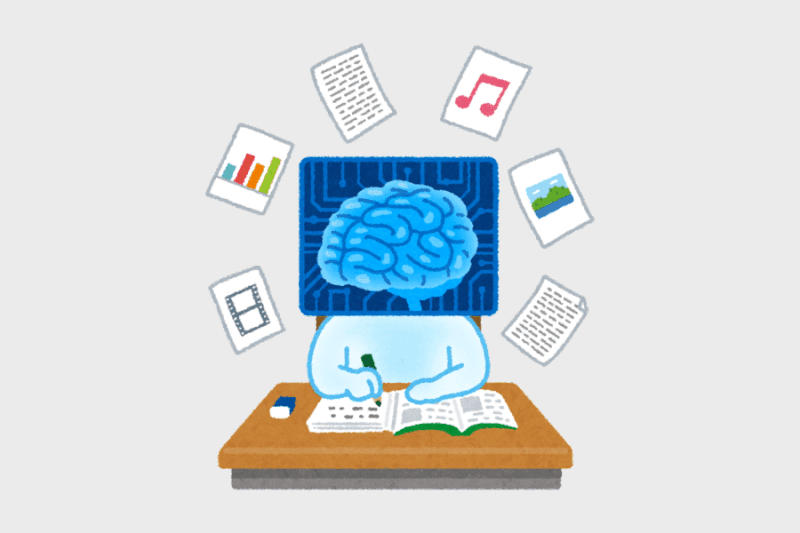
Instead of adding AI to every task, start with one problem and build a repeatable process around it. For businesses exploring more advanced workflows, Justo's AI Automation solutions can help connect automation opportunities with real operational needs.
- Identify the problem. Choose a task, such as updating an underperforming blog post or answering repeated customer questions.
- Collect reliable inputs. Use search data, customer feedback, analytics, existing content, and trusted sources.
- Use AI for a specific task. Ask it to group questions, compare page coverage, suggest an outline, or identify missing information.
- Review the output. Check facts, remove repetition, add original observations, and ensure the content answers the audience's actual question.
- Publish and measure. Compare results with the original performance and use the findings to decide what to improve next.
Example: Improving an Existing Ecommerce Blog
Imagine an ecommerce business has a blog post that receives search impressions but few clicks. Rather than immediately creating another article, the team reviews the existing page, its search queries, and competing content.
AI can help group queries by intent and flag questions the page does not answer. The writer then checks those findings, improves unclear sections, adds a useful product-selection example, and updates relevant internal links. After publishing, the team monitors clicks, relevant search visibility, and engagement.
This is an illustrative workflow, not a claim of measured results. Its value is that AI supports a defined task while the team makes the decisions and evaluates the outcome.
What Does the HubSpot 2026 Marketing Report Tell Us?
HubSpot's 2026 State of Marketing report draws on a survey of more than 1,500 marketers. Its findings offer a useful view of how teams are approaching marketing priorities.
- 48.57% identified using AI to create personalized content as a leading trend.
- 47.38% highlighted automation.
- 46.84% pointed to content that reflects brand values.
- 40.60% identified updating SEO for changes in search.
- 35.08% highlighted content repurposing.
- 86.4% of marketing teams reported using AI in at least a few areas.
These findings suggest that marketers are combining AI adoption with personalization, automation, brand identity, and changing search practices. They do not prove that AI alone increases revenue or guarantees better campaign performance. Results depend on how businesses apply the technology and measure its impact.
Source: HubSpot's 2026 Marketing Industry Trends Report
Benefits and Challenges of AI in Digital Marketing
AI can help marketing teams save time on repetitive tasks, explore customer data, scale content production, and support faster analysis. It can also help small teams manage more work without expanding every manual process.
However, AI-generated content can contain errors, repeat common ideas, or miss important context. Marketing teams must also consider data privacy, copyright, brand consistency, and the risk of relying too heavily on automation.
A practical rule is simple: use AI to support decisions, not to remove accountability. Review important claims, protect sensitive information, and keep people involved in work that affects customers or business decisions.
Website quality matters, too. Content improvements should be supported by a website that is easy to navigate, accessible, and technically sound. Justo's Business Website Development services cover website design, optimization, performance, and ongoing improvements.
How to Measure AI Marketing Results
Measure the outcome of the task, not just how much content or how many campaigns AI helps produce.
- SEO and content: Organic clicks, relevant impressions, engagement, and conversions.
- Email marketing: Click-through rate, conversion rate, unsubscribes, and deliverability.
- Paid campaigns: Cost per acquisition, conversion rate, and return on ad spend.
- Automation: Time saved, error rates, and successful completion of workflows.
Where possible, compare results with a previous baseline or a suitable control group. Consider the time spent reviewing AI output, too. A faster first draft is not a real efficiency gain if correcting it takes longer than writing it properly.
The Future of AI in Digital Marketing
AI is likely to become more integrated into research, campaign planning, customer support, analytics, and content workflows. Marketing teams may increasingly use connected systems that handle several steps in a process.
Still, predictions are not guaranteed. Businesses should evaluate tools based on their needs, test changes on a manageable scale, and keep human review in place. Useful expertise, trustworthy information, and a clear understanding of customers will remain important.
Conclusion
AI in digital marketing can help businesses work more efficiently, understand audiences, and improve how they plan and measure campaigns. But tools alone are not a strategy.
The strongest approach is to start with a clear problem, use AI for a defined task, verify the output, and measure the result. When AI supports human judgment instead of replacing it, marketing becomes more focused, useful, and accountable.